Voice Cloning AI Where Natural Ends and Creepy Begins
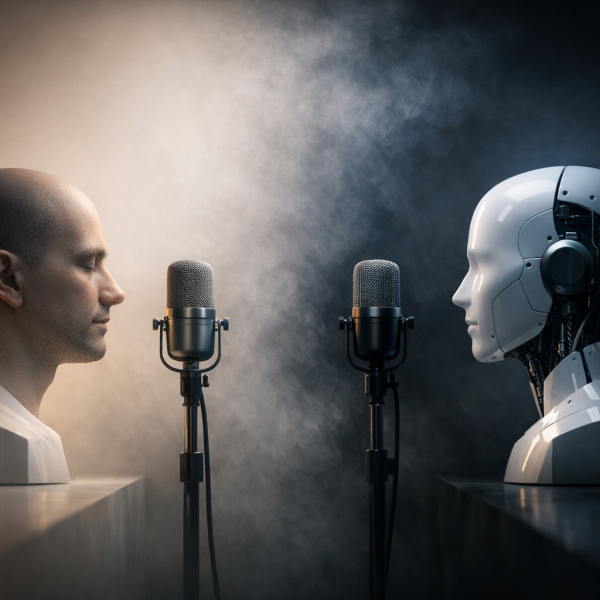
Artificial voices are everywhere, in customer support lines, navigation apps, virtual assistants, training materials, and more. As artificial intelligence advances, synthetic speech has shifted from robotic and generic to startlingly lifelike. This rapid progress brings powerful opportunities for brands and creators, but it also blurs the line between useful innovation and unnerving imitation. Understanding where natural, ethical use ends and where unsettling, even harmful, applications begin is essential for anyone working with modern audio technology.
1. How Modern Voice AI Learned to Sound Human
Early text-to-speech engines produced flat, monotone audio that no one could mistake for a real person. Modern systems use deep learning models trained on huge datasets of recorded speech. These systems analyze pronunciation, rhythm, intonation, and even emotional cues to reproduce a realistic voice pattern from text alone. With enough training data, AI can now mimic accents, ages, and speaking styles to the point that many listeners cannot easily tell the difference between a synthetic and a real voice.
Yet, realism alone does not guarantee quality or trust. While AI can technically produce speech that closely resembles a human voice, subtle elements like pacing, emotional nuance, and cultural context still matter. This is where professional linguists and audio experts come in. Many organizations combine cutting-edge AI tools with human expertise and high-end voice over services to ensure that what audiences hear is engaging, culturally appropriate, and ethically created.
2. When Synthetic Voices Feel Natural and Helpful
There are many scenarios where AI-generated voices offer practical, positive benefits. For example, customer support centers can use natural-sounding automated agents to handle basic inquiries quickly and consistently, freeing human staff to manage complex or sensitive issues. Educational platforms can convert text-based courses into audio to improve accessibility for visually impaired learners or busy professionals who prefer to listen while multitasking.
In entertainment, synthetic narrators can help publishers produce localized audiobooks at scale. Newsrooms and blogs can generate audio versions of articles for audiences who prefer listening over reading. In these cases, listeners usually understand that a machine is speaking, and they benefit from greater convenience, availability, and customization without feeling misled or manipulated.
3. The Ethical Line Consent and Ownership of the Human Voice
A crucial boundary between acceptable and unsettling use of AI speech lies in consent. Recording a person’s voice and using it to train a model should only happen with clear permission. That permission should cover how long the voice data is stored, who can use it, and for what purposes. Without explicit consent, cloning a person’s voice becomes a violation of privacy and personal identity, no matter how impressive the technology appears.
Voice is deeply personal, similar to a face or a fingerprint. When organizations treat it as a reusable, tradeable asset without the speaker’s informed approval, trust erodes quickly. Ethical voice AI projects now emphasize transparent contracts, well-defined usage rights, and meaningful options for voice owners to withdraw permission or limit future use of their vocal data.
4. Deepfakes, Impersonation, and the “Creepy” Factor
The most alarming uses of synthetic speech are those that deliberately impersonate real people. With only a short sample of someone’s voice, malicious actors can generate fake audio messages that sound convincingly like a public figure, company executive, or family member. These deepfake recordings can be used for fraud, blackmail, misinformation, or reputation attacks. The more natural and emotionally expressive the cloned voice is, the more disturbing and damaging the result.
Even outside criminal activity, voice cloning can feel deeply unsettling when it simulates people who never agreed to be replicated, such as deceased relatives or celebrities. What might seem like a technical demonstration can cross into an emotional intrusion. The “creepy” feeling often arises not only from how real the voice sounds, but from the sense that it has been taken out of the speaker’s control and placed in contexts they would never have chosen.
5. Emotional Manipulation and Loss of Authenticity
Another point where voice technology becomes troubling is emotional manipulation. Synthetic voices can be tuned to sound soothing, authoritative, urgent, or excited. When this emotional shaping is done transparently and in the listener’s interest, it can improve clarity and engagement. But when AI-driven voices are used to push aggressive sales tactics, political propaganda, or hidden agendas, the result is a loss of authenticity and audience trust.
Voice cloning becomes unsettling at precisely the point where the output is almost right, because the near-miss is more noticeable than an obvious error. Machine-translated text has the same uncanny register, and it is exactly what a reviewer is employed to detect. This piece on post editing machine translation examines what that review actually involves.
Human performers bring lived experience and genuine emotional interpretation to a script. Audiences can often sense the difference between an authentic reaction and a calculated simulation. Overreliance on fully synthetic speech for sensitive content, such as medical advice, mental health support, or news commentary, risks making communication feel hollow and manipulative, even if the information itself is accurate.
6. Why Human Expertise Still Matters in a Synthetic Age
As synthetic voices become easier to generate, the value of human-guided audio production actually increases. Skilled scriptwriters, directors, and voice professionals ensure that messages fit cultural norms, legal requirements, and audience expectations. They can decide when an AI-generated narrator is sufficient and when a human performer is necessary to maintain credibility and emotional depth.
In global communication, this distinction is even more important. Translating and adapting content for multiple languages involves more than literal word substitution. It requires local idioms, correct pronunciation of names and technical terms, and sensitivity to cultural references. Combining responsible AI tools with expert human review helps organizations achieve scale without sacrificing nuance or ethics.
7. Practical Guidelines for Using AI Voices Responsibly
To stay on the right side of the line between innovative and unsettling, organizations can follow a few practical guidelines. First, always obtain explicit, documented consent before training a model on anyone’s voice, and explain clearly how their voice may be used. Second, label synthetic audio so listeners are not deceived about who or what is speaking. Third, establish internal review processes for sensitive use cases, such as political messaging, health information, or financial services.
It also helps to implement technical safeguards: limiting who can access voice models, monitoring for misuse, and restricting highly realistic cloning capabilities to vetted, professional use. By pairing technical controls with robust ethical policies and human oversight, companies can harness the benefits of AI speech without crossing into manipulative or creepy territory.
Building Trust in a World of Synthetic Speech
Lifelike synthetic voices are transforming how information is delivered, stories are told, and services are provided. Used responsibly, they expand access, improve convenience, and support global communication. Yet as the technology closes the gap between machine and human speech, it also raises complex questions about consent, identity, authenticity, and emotional influence.
The key to staying on the right side of that boundary lies in transparency, respect for the individuals whose voices are involved, and a commitment to human oversight. Organizations that pair advanced AI tools with ethical practices and professional audio expertise will be best positioned to build long-term trust with their audiences. Those that ignore these responsibilities risk producing experiences that may be technically impressive, but ultimately feel invasive, deceptive, and deeply unsettling.